Do You Have An Astigmatism?

What is Astigmatism? - Astigmatism Explained
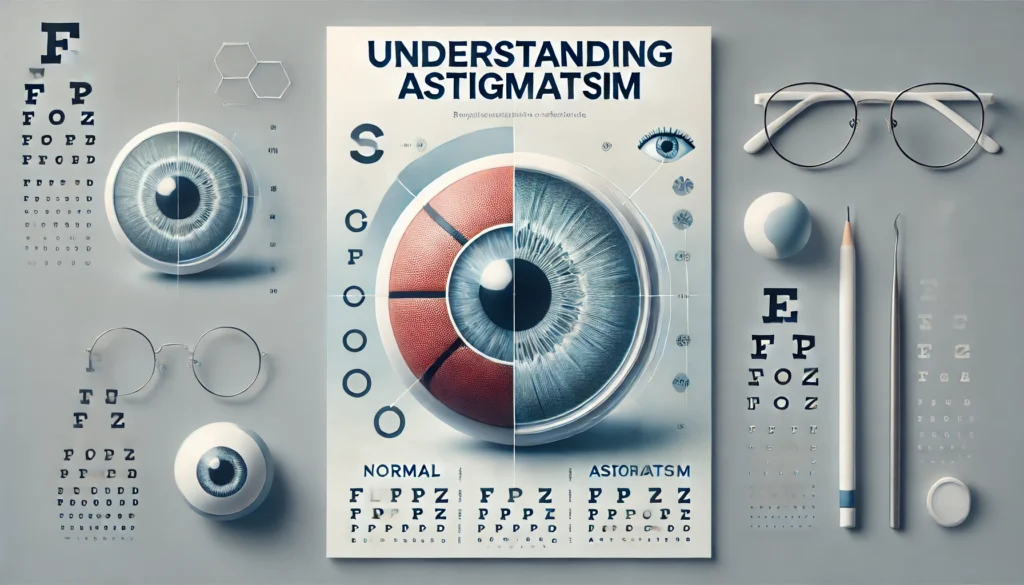
Astigmatism is a common refractive error of the eye that affects how light enters the eye and is focused on the retina. In a normal eye, the cornea (the outermost, clear layer of the eye) and the lens have smooth, even curvature, much like a basketball. In an eye with astigmatism, the cornea or lens has an irregular shape, more like a football. This uneven shape causes light to focus on multiple points on the retina, rather than a single point, leading to blurred or distorted vision.
Here are key points to understand about astigmatism:
- Irregular Corneal Shape: Astigmatism can result from an uneven curvature of the cornea or lens. Instead of being perfectly spherical, the cornea may have different curvatures in different meridians (the vertical and horizontal axis).
- Types of Astigmatism:
- Regular Astigmatism: The principal meridians are perpendicular to each other and can be corrected with eyeglasses, contact lenses, or refractive surgery.
- Irregular Astigmatism: Astigmatism that does not follow a regular pattern, often associated with corneal injuries or certain eye conditions.
- Symptoms:
- Blurred or distorted vision at all distances.
- Eyestrain or discomfort.
- Trouble focusing.
- Headaches.
- Diagnosis:
- A comprehensive eye exam, including a refraction test, helps determine the presence and severity of astigmatism.
- Correction:
- Eyeglasses: Lenses with a cylindrical power are prescribed to correct the uneven curvature of the cornea or lens.
- Contact Lenses: Toric contact lenses are designed specifically to correct astigmatism.
- Refractive Surgery: LASIK, PRK, or other refractive surgeries can reshape the cornea to correct astigmatism.
- Astigmatism and Other Refractive Errors:
- Astigmatism can coexist with nearsightedness (myopia) or farsightedness (hyperopia).
- This combination is referred to as compound astigmatism.
- Changes Over Time:
- Astigmatism may change over time, and regular eye exams are essential to monitor any changes in vision.
If you suspect that you have astigmatism or are experiencing changes in your vision, it is important to consult with an eye care professional. Your doctor can perform a thorough eye examination and recommend appropriate corrective measures to improve your vision and overall eye health.`
Feel free to book your next eye check up HERE. Alternatively, You can call us at (604) 372-3937 for Surrey and (604) 853-5575 for Abbotsford.
Curious whether a procedure could work for you?
Book a free, no-obligation consultation with our team.
Keep reading
Medical-Legal Expertise for Ophthalmologists and Healthcare Professionals: Why the Right Expert Matters
Medicine is becoming increasingly complex. Even when a physician has acted appropriately and provided care consistent with accepted medical practice, complaints, College investigations, insurance…
Understanding Eye Pressure and Glaucoma
When it comes to protecting your vision, eye pressure is one of the most important measurements your eye doctor checks during a comprehensive eye exam. While…

What Are the Key Advantages of ICL Surgery?
For patients seeking freedom from glasses and contact lenses, Implantable Collamer Lens (ICL) surgery has become an increasingly popular vision correction option. ICL is…
What is the Difference Between a General Cataract Surgeon and a Refractive Cataract Surgeon
When people are told they need cataract surgery, one of the first questions that often comes up is: what kind of surgeon should I choose? That’s…