
Amblyopia: What is a lazy eye? Can we treat it in childhood, adolescence or in adulthood?
What is Amblyopia?
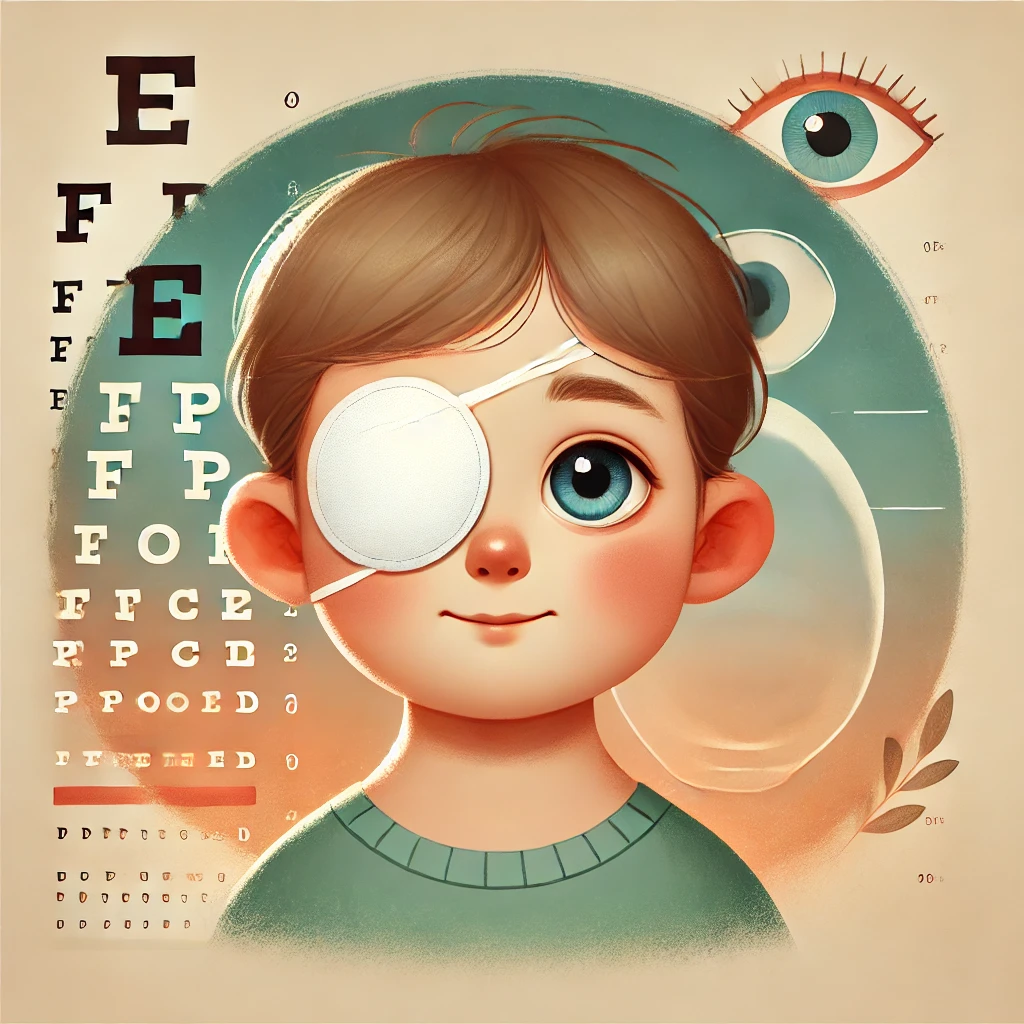
More commonly known as ‘lazy eye’, Amblyopia is a condition that typically develops in early childhood and It occurs when there is a disruption in the normal development of the eye. Amblyopia typically affects one eye, though it can occasionally occur in both eyes.
What are the main causes of Amblyopia?
- Strabismus is a muscle imbalance of the eyes, where one eye may turn inward, outward, upward or downward. This is the most common cause and can prevent the eyes from working together.
- Anisometropia is the significant difference in refractive error between the two eyes, such as one eye being more nearsighted, farsighted or having more astigmatism than the other.
- Disruption in the development of the eye which can occur from birth.
What are the common symptoms of Amblyopia?
- Blurred or diminished vision – the affected eye may not see as clearly as the other eye.
Poor depth perception – the patient may experience difficulty in judging distances.
Squinting or shutting one eye – the patient may unconsciously favour the stronger eye.
Difficulty focusing – because of the imbalance between eyes, the patient may have difficulty focusing on objects.
- Eye turn/deviation – especially noticed in photographs
How do I know if I have Amblyopia?
A comprehensive eye examination with an Ophthalmologist can determine whether or not you have Amblyopia. A series of tests will be conducted including visual acuity assessment, measuring the alignment of your eyes, checking for refractive errors and a pupil response test
Are there any treatment options for Amblyopia?
Early intervention is crucial in the treatment of Amblyopia, ideally during the period of visual development in early childhood. Corrective lenses may be used to correct refractive errors and help equalize vision between the eyes. Patching is also a common treatment option as the stronger eye may be patched to encourage the use and strengthen the weaker eye. Vision therapy, including exercises and activities to improve eye coordination and visual processing, may also be an option. Treatment may be a long-term process requiring patience and consistency with regular follow ups to monitor the progression and make necessary adjustments. It is important to note that, once the eye has fully developed, there is very little that can be done in terms of treatment.
How can I prevent my child from developing Amblyopia?
It is important to schedule routine eye examinations for your child, even if there are no apparent vision problems. Remember, early intervention is key in preventing further development of Amblyopia. If you notice any signs of eye misalignment, or other vision issues in your child, prompt examination is recommended.
Feel free to book your next eye check up HERE. Alternatively, You can call us at (604) 372-3937 for Surrey and (604) 853-5575 for Abbotsford.
Curious whether a procedure could work for you?
Book a free, no-obligation consultation with our team.
Keep reading
Medical-Legal Expertise for Ophthalmologists and Healthcare Professionals: Why the Right Expert Matters
Medicine is becoming increasingly complex. Even when a physician has acted appropriately and provided care consistent with accepted medical practice, complaints, College investigations, insurance…
Understanding Eye Pressure and Glaucoma
When it comes to protecting your vision, eye pressure is one of the most important measurements your eye doctor checks during a comprehensive eye exam. While…

What Are the Key Advantages of ICL Surgery?
For patients seeking freedom from glasses and contact lenses, Implantable Collamer Lens (ICL) surgery has become an increasingly popular vision correction option. ICL is…
What is the Difference Between a General Cataract Surgeon and a Refractive Cataract Surgeon
When people are told they need cataract surgery, one of the first questions that often comes up is: what kind of surgeon should I choose? That’s…